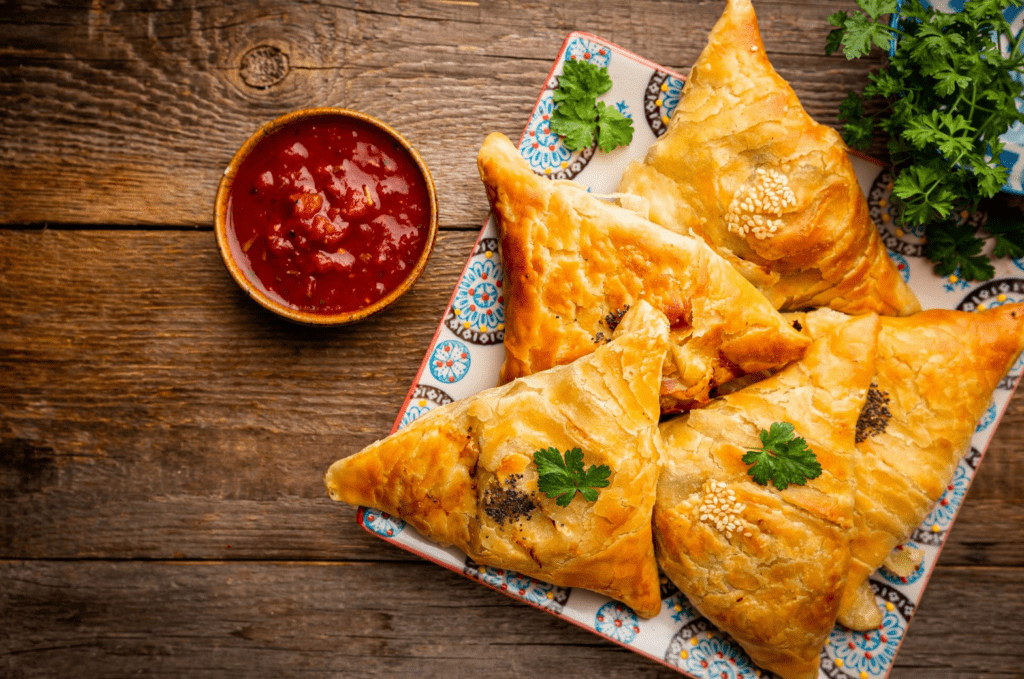
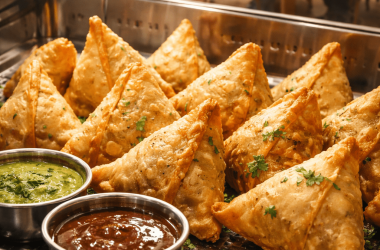
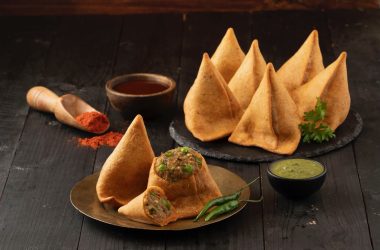
Bringing 1,200 years of samosa history to the American hot case
The samosa’s 1,000-year journey from 9th-century Persia to Delhi’s royal courts to modern street food. How a Portuguese potato transformed a courtly dish into the world’s most democratic snack.
The Samosa Didn’t Start in India. Here’s Where It Actually Came From
I’ve eaten samosas in a lot of countries. In Mumbai street stalls at midnight. At a gurdwara in Amritsar. From a packet in a 7-Eleven in Singapore. In a small restaurant in Nairobi that could have been transplanted directly from Delhi. And a version — crispier, smaller, filled with spiced lamb — in a café in Istanbul that the owner just called ‘böregi.’
Every time, I assumed it was the same thing wearing different clothes. A local interpretation of an Indian original. I was wrong about the direction of travel.
The samosa didn’t start in India. It came to India. And the story of how it got there — across trade routes, royal courts, and centuries of culinary migration — is one of the most fascinating journeys in food history.
Before India: The Persian Saddlebag Snack
The earliest known reference to anything resembling a samosa appears in 9th-century Persian poetry. The Abbasid-era poet Ishaq al-Mawsili wrote about a pastry called sanbusaj — a triangular, fried parcel filled with minced meat, nuts, and spices. The word itself traces back to the Middle Persian sambosag, meaning roughly ‘triangular pastry.’
By the 10th and 11th centuries, Arab cookbooks were full of recipes for sanbusak. The Persian historian Abu-al-Fazl Beyhaqi described it being served in the royal Ghaznavid courts of Central Asia — a delicacy of the nobility, small and elegant, packed with fragrant fillings.
But it wasn’t delicate for long. The genius of the sanbusaj was practical: it was portable. Filled, sealed, fried. Easy to cook over a campfire. Easy to pack into a saddlebag and eat on the road. Along the Silk Road trade routes connecting Central Asia to the Indian subcontinent, merchants and travellers carried it — the same way a busy person today grabs something hot before they get on a train.
The Delhi Sultanate Changed Everything
The samosa arrived in India sometime between the 13th and 14th centuries — brought by the Central Asian and Middle Eastern chefs who came to cook at the courts of the Delhi Sultanate. We know this with unusual precision because people wrote about it.
Around 1300 CE, Amir Khusro — scholar, poet, and the royal voice of the Delhi Sultanate — documented that ‘the princes and nobles enjoyed the samosa prepared from meat, ghee, onion, and so on.’ The explorer Ibn Battuta, visiting Delhi’s court in 1333, described being served sambusak as a first course — small pies stuffed with minced meat, almonds, pistachios, and walnuts.
So in its early Indian life, the samosa was aristocratic. A dish of courts and kings. That didn’t last — and the next transformation is where it gets genuinely interesting.
The Portuguese Brought the Potato. India Made It a Samosa.
The samosa we know today — the one filled with spiced potatoes and peas, hot from a kadai, eaten standing up — didn’t exist until the 17th century. Because until then, there were no potatoes in India.
The Portuguese brought the potato to India via Goa around 1615. What was originally a royal snack filled with meat and nuts became, over the following century, a democratic street food filled with something new, filling, and cheap. The potato samosa made sense in ways the meat samosa never could at scale: potatoes were affordable, spices were everywhere, and the street-food format — hot, quick, satisfying — was perfect for a growing urban population.
The vegetarian samosa also crossed caste, income, and religion. It became food for everyone. One of the most democratic snacks in history.
The samosa across the world — same idea, different name → Samsa — Central Asia (Uzbekistan, Kazakhstan): baked in a tandoor, typically lamb → Sambousek — Middle East (Egypt, Lebanon, Syria): usually meat or cheese, sometimes baked → Sambusa — East Africa (Ethiopia, Somalia): a Ramadan staple, spiced beef → Singara — Bengal: smaller, flakier, filled with peanuts and raisins → Börek — Turkey: layered pastry, savoury fillings — a distant cousin
What It Means for Tuk Took
When we decided to build Tuk Took Bites around the samosa, we weren’t trying to make an ‘Indian snack brand.’ We were working with something much older and wider than that.
The samosa has been a Persian court delicacy. A Silk Road traveller’s meal. An Indian royal snack. A street food for millions. A Kenyan birthday party staple. It has survived a thousand years not because it’s exotic — but because it’s exactly right. Handheld. Sealed. Crispy. Satisfying.
One bite, and you’ll get it.
Frequently Asked Questions
Q: Where did the samosa originate? A: The samosa originated in Persia (modern-day Iran and Central Asia). The earliest written reference is in 9th-century Abbasid-era Persian poetry, describing a triangular fried pastry called sanbusaj. It arrived in India via the Delhi Sultanate courts in the 13th–14th century.
Q: Why is the samosa filled with potatoes? A: The potato filling only became possible after Portuguese traders brought potatoes to India via Goa around 1615. Before that, samosas were filled with minced meat, nuts, and spices. The potato transformed a courtly dish into an affordable street food for everyone.
Q: Is the samosa the same across all countries? A: No — while the basic concept is the same (a filled, sealed, fried or baked pastry), every culture that adopted the samosa adapted it. The Central Asian samsa is baked in a tandoor. The East African sambusa uses local beef and spices. The Bengali singara is smaller and flakier. The format travels; the filling adapts.
Q: When did samosas arrive in America? A: Samosas arrived in the US primarily through Indian immigration, particularly accelerating after the Immigration Act of 1965. They are now widely available in Indian restaurants and are increasingly found in convenience store hot cases and food halls.
Eating shouldn’t feel like a task — but for many busy professionals, it has. Between desk lunches, protein bars, and rushed routines, food has become something to get through rather than enjoy. Tuk Took Bites was built to change that — starting with warm, Indian-inspired samosas designed for real life, real schedules, and real hunger.
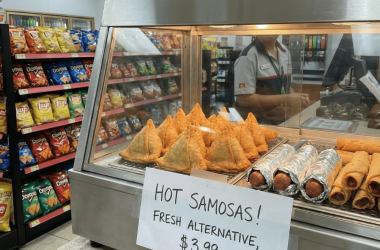
A single premium samosa at $3.99 generates 50%+ store-level margin. Real data shows one specialty coffee shop cleared $83,000+ annual gross profit from samosas alone. No new equipment needed. See the margin math that's reshaping c-store foodservice strategy.
A hot case is only as good as the system around it. Samosas hold 90–120 minutes without quality loss, batch-prep ahead of rush, and sit front-row eye-level next to coffee. But the real win is the repeat trigger: chutney and craveability. Tuesday's first purchase becomes Thursday's habit, then part of the weekly routine. That's not inventory management—that's habit architecture.
The samosa's 1,000-year journey from 9th-century Persia to Delhi's royal courts to modern street food. How a Portuguese potato transformed a courtly dish into the world's most democratic snack.
A viral Stockton street party revealed something deeper: Punjabi and Mexican communities in California have shared food, culture, and family ties for more than 100 years. Here’s the forgotten story behind one of America’s most unusual food histories.
Butter chicken (murgh makhani) wasn't invented by a royal chef or passed down through centuries of tradition. It was created in the early 1950s at Moti Mahal restaurant in Old Delhi — born from resourcefulness, a refugee family, and the oldest problem in the restaurant business: leftover food. Here's the true origin story of India's most famous dish.