Hot Case Playbook: Hold Time, Placement & Repeat Purchase Triggers

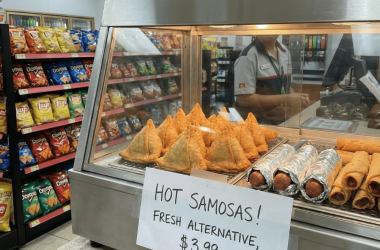
A hot case is only as good as the system around it. Samosas hold 90–120 minutes without quality loss, batch-prep ahead of rush, and sit front-row eye-level next to coffee. But the real win is the repeat trigger: chutney and craveability. Tuesday’s first purchase becomes Thursday’s habit, then part of the weekly routine. That’s not inventory management—that’s habit architecture.

Where the Repeat Purchase Happens

A hot case is only as good as the item inside it. And an item is only as good as the system around it — how it’s prepped, how long it holds, how it’s positioned, and whether the customer who buys it once comes back for it again.

This is a practical guide for operators thinking about samosas in the hot case. No fluff. Just the setup that works.

Step 1: Equipment (You Already Have It)

The most common question we get: ‘What equipment do I need?’ The answer is almost always: what you already have.

→  Convection oven, speed oven, or air fryer — any of these work for heating from frozen
→  Standard warming cabinet or hot display case — for holding post-cook
→  No fryer required unless you already use one

The samosa is engineered to run the same operational playbook as taquitos and stuffed pastries. Same equipment. Same workflow. Different story.

Step 2: The Cook Protocol

Heating from frozen takes 6–8 minutes in most commercial ovens. What to watch for:

→  Internal temperature should reach 165°F
→  Pastry should be golden and set — not pale, not dark
→  Batch prep is the right approach: heat 12–24 units at a time ahead of rush windows
→  Don’t cook individual units per order — batch, hold, sell

Step 3: Hold Time — The Number That Matters Most

Hold time is the variable that makes or breaks a hot case program. An item that goes soggy at 45 minutes creates waste and a bad reputation in the case.

Tuk Took samosas hold 90–120 minutes in a standard warming cabinet without meaningful quality loss. The pastry stays set. The filling stays moist. For most stores, one prep cycle in the morning covers the entire rush window. A second batch at midday covers afternoon snack and early evening.

Step 4: Placement and Signage

→  Front row, eye level — not tucked at the back where it requires hunting
→  Adjacent to coffee or fountain — the beverage attach is where trip value multiplies
→  Two lines of signage maximum: ‘Hot & Crispy Samosa with Chutney’ + price
→  Resist the urge to over-explain — if you’re writing three sentences, you’ve already lost them

Step 5: The Repeat Purchase Trigger

Craveability is built on a specific combination of factors: flavour satisfaction, ease of eating, and the feeling of value. Samosas hit all three.

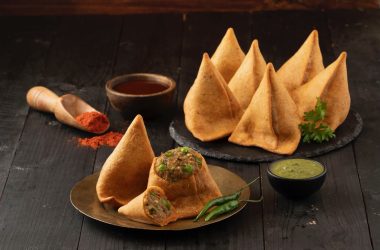
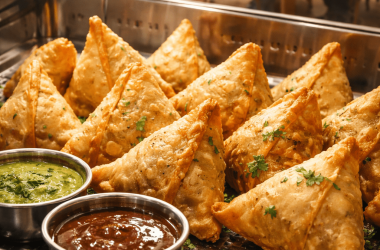
The chutney is the repeat purchase trigger. Green chutney (cilantro mint) adds brightness and freshness. Tamarind chutney adds sweet-sour depth. Together, they make the samosa feel like something you got from a restaurant — at a c-store price. That contrast is what makes customers come back.

The morning routine is where this embeds. Someone buys a samosa with their coffee on Tuesday. It’s good — better than expected. On Thursday, they buy it again. By week three, it’s part of the stop. That’s the repeat purchase loop.

Frequently Asked Questions

Q: How long should samosas hold in a hot case?
A: Tuk Took samosas maintain quality for 90–120 minutes in a standard warming cabinet. After that window, the pastry may begin to soften and units should be rotated.

Q: What’s the best placement for samosas in a hot case?
A: Front row, eye level, adjacent to coffee or fountain. This maximises visibility and positions the samosa for the beverage attach — the combination that most dramatically lifts basket size.

Q: How much staff training does a samosa program require?
A: 30 minutes to one hour for any associate, using a printed instruction sheet. The workflow — heat in batches, transfer to warming case, serve with chutney — is consistent with what most c-store staff already do.
Share:

Related Articles