The $3.99 Hot Snack That Prints Margin: Samosa Economics for C-Stores
A single premium samosa at $3.99 generates 50%+ store-level margin. Real data shows one specialty coffee shop cleared $83,000+ annual gross profit from samosas alone. No new equipment needed. See the margin math that’s reshaping c-store foodservice strategy.
28.7% of Your Customers Are Leaving. Here’s How to Stop Them.
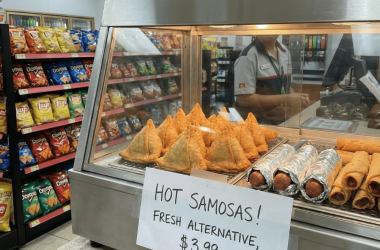
Samosa Economics: There’s a moment every c-store operator knows. The hot case is stocked. The coffee is fresh. The morning rush is coming. And you’re watching customers grab their drink, glance at the food case, and walk out the door.
Not because they didn’t want food. Because nothing in that case was quite right.
That’s the gap we’re building Tuk Took Bites to fill. And the numbers behind it are clearer than most people realise.
The Revenue Opportunity, Straight Up
Let’s look at a real example. A single-location specialty coffee shop added a premium samosa to their grab-and-go offering. Here’s what happened over 12 months:
12-Month Unit Economics — Real Example
→ Suggested retail price: $3.99
→ Average daily units sold: 75
→ Annual revenue: $109,226
→ Strong store-level gross profit margin
One item. One format. One year. Over $100,000 in incremental revenue from a product that required zero new equipment and approximately 30 minutes of staff training.
For a c-store context, the logic holds just the same. At a suggested retail of $3.99, store-level margin is competitive with almost any item in the hot case. Reach out to us directly for program pricing — we’ll share the full picture.
Why the Hot Case Is Underperforming
NACS data from 2024 puts foodservice at 38.6% of in-store gross margin dollars at convenience stores. That’s not a side category — that’s where the money is.
And yet 28.7% of shoppers planned to buy food from a QSR within 30 minutes of leaving a c-store. They didn’t leave because they wanted to drive somewhere else. They left because nothing in-store was compelling enough.
The stores winning food service aren’t the ones with the biggest menus. They’re the ones with the right items — operationally simple, high perceived value, and enough craveability to build a repeat habit.
What Makes Samosas Different
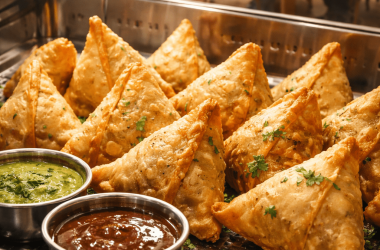
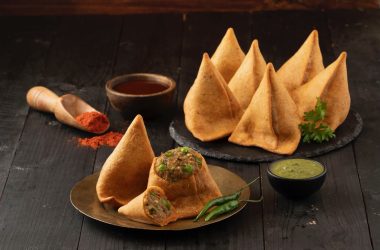
The samosa format is one of the most naturally hot-case-compatible items in the world. It’s handheld, batchable, and holds beautifully — 90 to 120 minutes in a standard warming cabinet. It runs the same operational playbook as a taquito or stuffed pastry. The only thing that changes is the story at the counter.
“Crispy pastry, bold potato filling, served with green and tamarind chutney” is a ticket worth $3.99. It feels restaurant-quality because it is. The chutney alone changes the whole perceived value equation.
What This Looks Like at Scale
At 25 units per day, per location, at $3.50 average retail — that’s $31,900 in annual revenue per store. Add a beverage attach (NACS reports 37.4% co-purchase rate between prepared food and packaged beverages) and the trip value compounds further.
For a chain of 20 stores, that’s over $600,000 in annual revenue from one SKU, run through existing equipment. That’s the math.
Frequently Asked Questions
Q: What margin can a c-store expect from samosas? A: Samosas are one of the strongest-margin items you can run in a hot case at a $3.99 retail price point. Margins are competitive with the top performers in most c-store foodservice programs. Reach out for program details specific to your store count and region.
Q: How long do samosas hold in a hot case? A: Tuk Took Bites samosas hold 90–120 minutes in a standard warming cabinet or hot display case. This makes them well-suited to batch prep ahead of rush windows without quality degradation.
Q: What equipment do I need to run samosas in my c-store? A: No new equipment is required. Samosas can be heated in a convection oven, speed oven, or air fryer and held in a standard warming cabinet — the same equipment already used for taquitos and stuffed pastries.
Q: How do I get wholesale pricing? A: Visit TukTook.com/wholesale to request program details, case study documentation, and pricing for your store count and region.
Eating shouldn’t feel like a task — but for many busy professionals, it has. Between desk lunches, protein bars, and rushed routines, food has become something to get through rather than enjoy. Tuk Took Bites was built to change that — starting with warm, Indian-inspired samosas designed for real life, real schedules, and real hunger.
A single premium samosa at $3.99 generates 50%+ store-level margin. Real data shows one specialty coffee shop cleared $83,000+ annual gross profit from samosas alone. No new equipment needed. See the margin math that's reshaping c-store foodservice strategy.
A hot case is only as good as the system around it. Samosas hold 90–120 minutes without quality loss, batch-prep ahead of rush, and sit front-row eye-level next to coffee. But the real win is the repeat trigger: chutney and craveability. Tuesday's first purchase becomes Thursday's habit, then part of the weekly routine. That's not inventory management—that's habit architecture.
The samosa's 1,000-year journey from 9th-century Persia to Delhi's royal courts to modern street food. How a Portuguese potato transformed a courtly dish into the world's most democratic snack.
A viral Stockton street party revealed something deeper: Punjabi and Mexican communities in California have shared food, culture, and family ties for more than 100 years. Here’s the forgotten story behind one of America’s most unusual food histories.
Butter chicken (murgh makhani) wasn't invented by a royal chef or passed down through centuries of tradition. It was created in the early 1950s at Moti Mahal restaurant in Old Delhi — born from resourcefulness, a refugee family, and the oldest problem in the restaurant business: leftover food. Here's the true origin story of India's most famous dish.